


| This past April, the design fair Ilk in Milano displayed some of the most innovative and contemporary Turkish design works in Milan. Among the 30+ design-forward individuals was artist Yilmaz Zenger. Defining himself first and foremost as a teacher and creator, Zenger does not consider painting and sculpting his professional fields, but instead describes his work as an emotional and creative release. Teaching a class on “Perception Illusion” at Istanbul Technical University and “Designing the Future” at Anatolian University while maintaining his atelier Zenger Ltd. Sti., Zenger considers sculptural, drawn, and painted works outside the spectrum of his career work. Still, he has exhibited in Turkey Spain, New York, and China for years. |

|
Mary Stack on Yilmaz Zenger

This past April, the design fair Ilk in Milano displayed some of the most innovative and contemporary Turkish design works in Milan. Among the 30+ design-forward individuals was artist Yilmaz Zenger. Defining himself first and foremost as a teacher and creator, Zenger does not consider painting and sculpting his professional fields, but instead describes his work as an emotional and creative release. Teaching a class on “Perception Illusion” at Istanbul Technical University and “Designing the Future” at Anatolian University while maintaining his atelier Zenger Ltd. Sti., Zenger considers sculptural, drawn, and painted works outside the spectrum of his career work. Still, he has exhibited in Turkey Spain, New York, and China for years. Denying careerism, Zenger’s modest attitude toward his traditional artworks does not mask his technical skill. His most recent show at Broadway Gallery in New York hosted an impressive body of resin, metal, and acrylic sculptures. He sees his atelier design work, on the other hand, as a bridge between his interests in math and science and his expressionist artworks. He explains that, "Design is to add my emotions and creative energy into the rational application of mathematics. In this way design begins with defining a new problem."
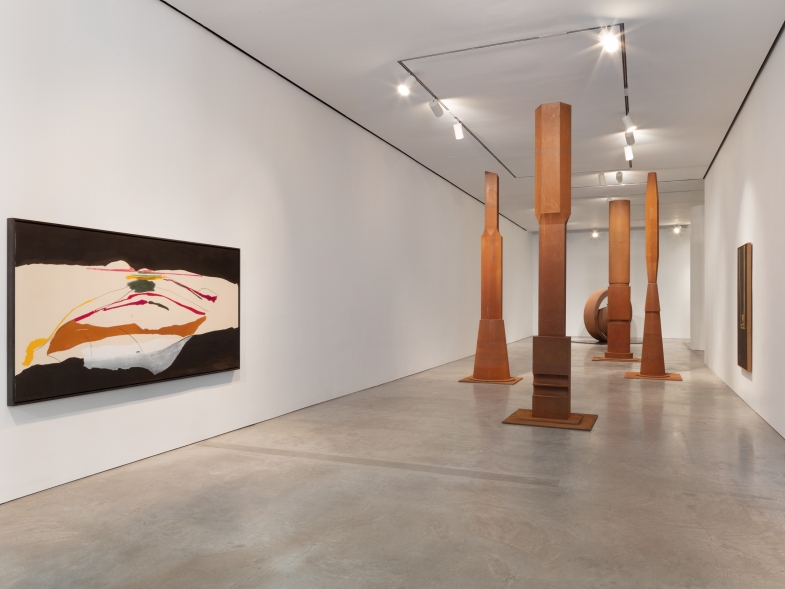
Every time Zenger goes to the drawing board it is to resolve a problem. His organically shaped spiral sculptures at Broadway Gallery were born from his contemplation on the Möbius strip, a mathematical and scientific construct of a common optical illusion. Imagine a strip of paper with a line drawn on one side. Pick up the paper, twist it 180 degrees, and then loop it so that both ends connect and the line continues uninterrupted. One would assume a disjunction and that viewing the actual shape would be visually confusing. Zenger relates this to two of the four main German philosophical Gestalt principles of the early 20th century. Continuity refers to how certain forms aid in the eye’s continual movement while closure addresses how we often perceive an object as whole and complete, although lines and form may not actually adjoin. Zenger’s Möbius strip is a closed structure, but does not appear to be continuous. Unlike a design piece that can be engineered mathematically and resolved later through execution, there’s no physical answer to the Möbius strip. Zenger’s sculptures are a reflection on humanity’s instinctive practices; they find resolve by presenting us with new ways to think about how we view them and the world around us. The Möbius strip and other ideas that fuel his traditional artworks are points of inspiration. Zenger dreams up the personalities behind such concepts and pours them into his work.
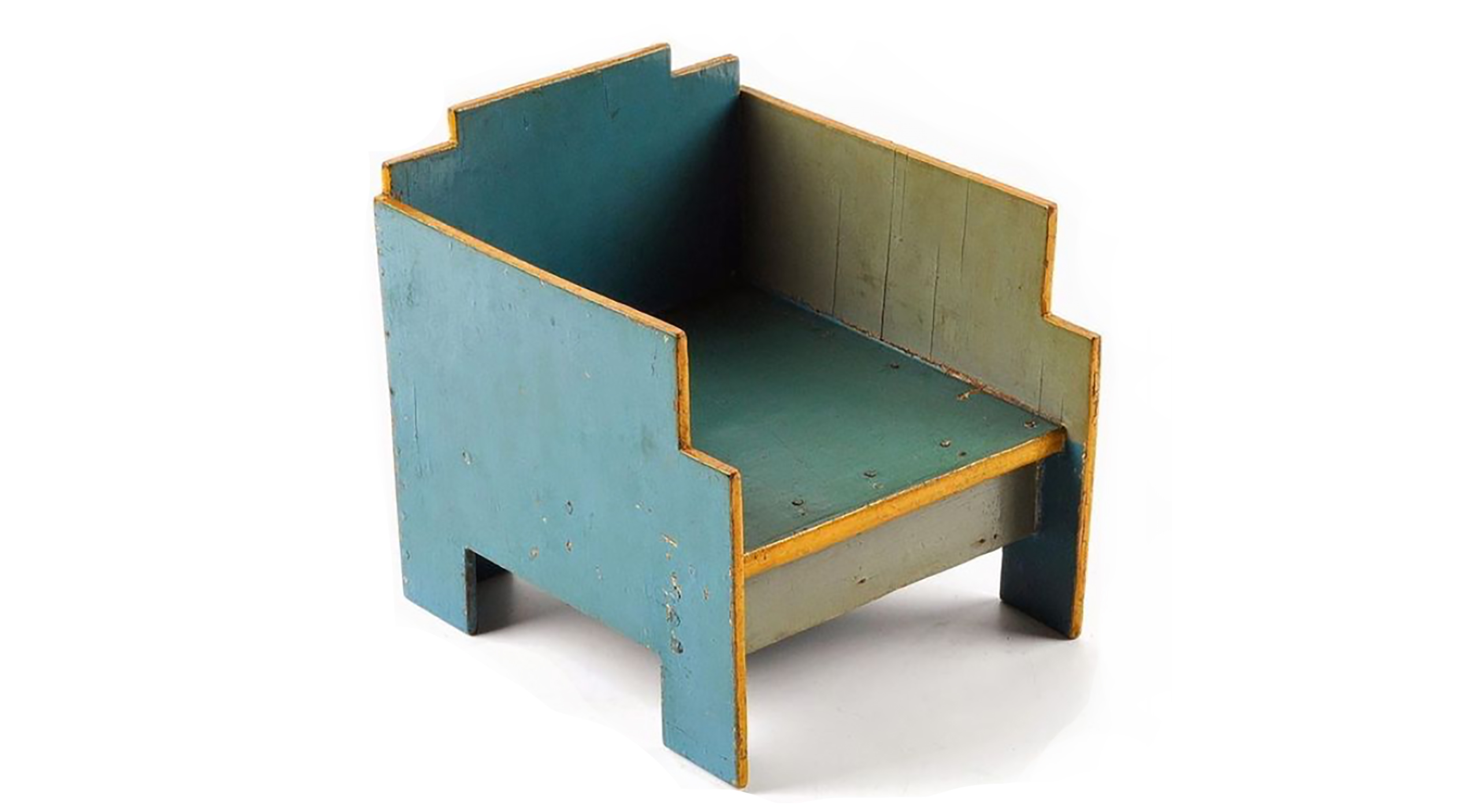
Zenger has been both creator and teacher in areas outside the classroom by tackling the fields of fashion, photography, furniture design, fine arts, architecture, writing, curation, and film direction. He has, especially, been a role-model in design by relentlessly formulating new problems and challenging himself to resolve them. The furnishing design store Terminal NYC was home to his modern 360 hanging light structure. 360 gained attention from the magazine New York, which commended its functionality and sleek design. An acrylic-painted and nearly three-foot-long metal arm supports a fiberglass head that can rotate in every direction. Among his furniture work are office series, one of which was for Apple and included an armchair specifically fitted for the iMac. Praised by the electronics magazine Wired, his modernist yet minimalist fiberglass piece was sold exclusively in New York and raised interest worldwide. The chair features a swivel keyboard holder as well as an extendable surface with an inset space to cup your PC. Most of his design work has a 60s Pop feel, using plastics and eye-popping candy colors. The iMac chair in particular exemplifies his concern for comfort, convenience, and purpose while styling a clean and unfettered yet energetic look. Dozens of reviews were written about Zenger’s reinterpretation of the everyday work desk. But while his iMac chair was a hot commodity abroad, he admitted to not one selling in Turkey.
Born in Ankara and currently residing in Istanbul, Zenger’s international success has not diminished his concern for his country. The value of the Turkish lira significantly decreased in 2006, leading to an inflation that dampened consumer demand. Zenger realizes that paying for a 900-dollar customized office chair is not necessarily priority. While Turkey may not be a wealthy nation, it does have a rich historical past. In an interview with the online Turkish design forum TRDW, Zenger explained that Istanbul, unlike any other city in the world, has been populated for 7,000 years without interruption. As a result, the city is a melting pot of cultural history and every building and public space is an anthropological treasure. Zenger respects and wants to preserve this historical richness while encouraging changes that he believes that Turkish people need. Unfortunately development and construction restrictions have made this a difficult task. In addition Zenger claims that architectural projects are often poorly staffed: many people who work to implement the designs are inexperienced and underqualified. Still Zenger acknowledges Istanbul’s uniqueness. He fights unceasingly to revitalize the city.
In 2005 Zenger founded IDW (Istanbul Design Week), choosing the historical site of the Old Galata Bridge as its location. The design fair presented 56 firms and foundations, 52 independent designers, and eight universities; hosting back-to-back workshops, conferences, and competitions throughout the event. Last year IDW’s numbers escalated to 84 companies, 65 local designers, and ten universities, with this past September’s event generating an even bigger buzz. Zenger first described the concept behind the fair as "Wet marketplace Halic, bridges where cultures meet, waterworld Istanbul." Halic refers to the Golden Horn, the body of water that divides the city. The Old Galata Bridge has long since been the connection over Halic between two significantly different districts of Istanbul. The bridge now symbolizes a space for the fluid interchanging of ideas. Since IDW, the bridge has captured the city’s attention and is reestablishing itself as a pragmatic and valuable piece of infrastructure. Within only two years, Zenger’s fair has flourished and has provided new platforms for fashion, graphic, dining, technological, and architectural designers to see eye to eye. While some may look to Paris, Milan, or New York for the cutting edge, Eastern Europe has become the breeding ground for some of the freshest young artists and designers. Zenger is helping Turkey step notably to the forefront.
Most recently Zenger participated in the public art project “Cow Parade,” heralded as one of the most successful international charity events to date. Various artists decorated life-sized fiberglass cow sculptures that were then situated from Nisantasi to Maslak and in other select public locations. New York, Tokyo, London, Paris, and Florence are a few of the 25 different cities that have held their own “Cow Parades” since the first event occurred in 1999. The cows were sold and Istanbul’s proceeds will be donated to ACEV (the Mother Child Education Foundation), the Street Children Rehabilitation Association, and to TEMA (The Turkish Foundation for Combating Soil Erosion and Reforestation and the Protection of Natural Habitats). Zenger is now reportedly working on the design for a hybrid car whose details, for security and liability issues, cannot be divulged in full. Creating environmentally and socially progressive products is perfectly in sync with Zenger’s goals of collective growth and development. The people of Istanbul applaud Zenger’s successes and praise his continued efforts as he habitually focuses on the future, toward tomorrow’s issues, and what can be done to resolve them.
Conflict is ever-present in Zenger’s life. In his public works, his atelier projects, and in his personal artwork, he needs something to push and pull and to work with and resist against. He perpetually stretches his concepts and pushes the materials until they reach an exhaustive state, the two come together, and a new object results. Zenger’s philosophy calls for perpetual construction and deconstruction. Zenger agrees with the 20th-century pianist Vladimir Horowitz, who said, “Intellect is always the guide, but not the goal of performance.” Zenger realizes that it is all about process. His works are scattered among different disciplines because he doesn’t preconceive the end product. He works with an idea until it takes its own course. The poignant truth of Horowitz’s quotation is that at some point we must submit to losing control if we want to truly explore the possibilities. Zenger reflects that, "My victories and my failures are the products of my desire for freedom." His life already reflects freedoms many wish for and freedoms he has gained by following his interests without hesitation and unfailingly.